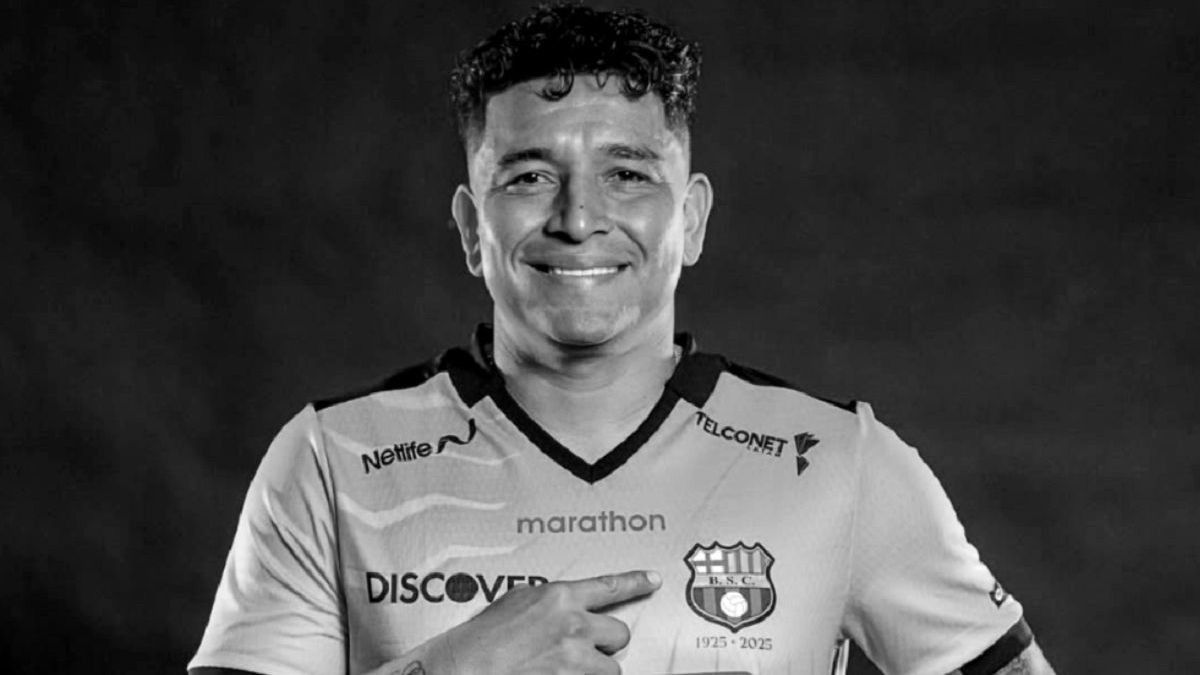
Mario Pineida, a former Ecuadorian international footballer was shot dead at the age of 33 in Guayaquil.
The horrific incident which also left another person dead and another wounded, highlights the escalating violence in Ecuador as the country faces a record number of homicides.
In a shocking turn of events, the former footballer was killed in a drive-by shooting in Guayaquil on Wednesday. The 33-year-old, was shot by attackers on motorbikes while he was with his mother and another woman.
Local reports indicate that Pineida was targeted in the Samanes region, situated in the northern part of Guayaquil, which is approximately 265 kilometers (165 miles) southwest of Quito, the capital of Ecuador.
In the incident, another unidentified person was also killed, and a third individual sustained injuries.
Ecuador's Interior Ministry confirmed Pineida's death but did not provide specific details regarding the circumstances of the shooting.
His former club, Barcelona de Guayaquil, expressed its condolences, stating, "Our fans are saddened by Pineida's death."
The violent incident has sent shockwaves across Ecuador, which is grappling with an unprecedented wave of violence.
According to the Ecuadorian Observatory of Organized Crime, the nation is projected to record over 9,000 homicides this year, surpassing the previous year's figure of 7,063 and the 2023 record of 8,248 violent deaths.
President Daniel Noboa has vowed to combat the growing influence of criminal organizations that have flourished in Ecuador, often linked to international drug cartels.
This commitment comes in the wake of increasing violence that has affected not only footballers but also countless citizens.
In November, a 16-year-old player from Independiente del Valle was killed by a stray bullet in Guayaquil, reaffirming the pervasive danger faced by athletes in the region.
Earlier incidents this year saw the deaths of Maicol Valencia, Leandro Yépez, and Jonathan González, all of whom were footballers who lost their lives due to gun violence.
Pineida, known for his role as a full-back, had his last appearance for Ecuador during the 2021 Copa América, where he played as a late substitute in a group-stage match against Brazil.
He was not part of the team that qualified for the upcoming 2026 World Cup, marking a significant shift in his career.
The defender began his professional journey at Independiente del Valle, where he played from 2010 to 2015.
He later joined Barcelona de Guayaquil in 2016, where he celebrated two league titles. Pineida also had a brief stint at Brazil's Fluminense in 2022, further showcasing his talent on an international platform.
The tragedy of Pineida’s death comes as the nation reels from the escalating violence that has affected various sectors, including sports.
His untimely passing not only robs Ecuador of a talented footballer but also serves as a grim reminder of the urgent need to address the growing threat posed by organized crime.
As the nation mourns the loss of a football star, the call for action against the spiraling violence becomes ever more pressing.
The future of sports in Ecuador hangs in the balance as authorities grapple with the deep-seated issues plaguing the country.































Comments
Sign in with Google to comment, reply, and like comments.
Continue with Google